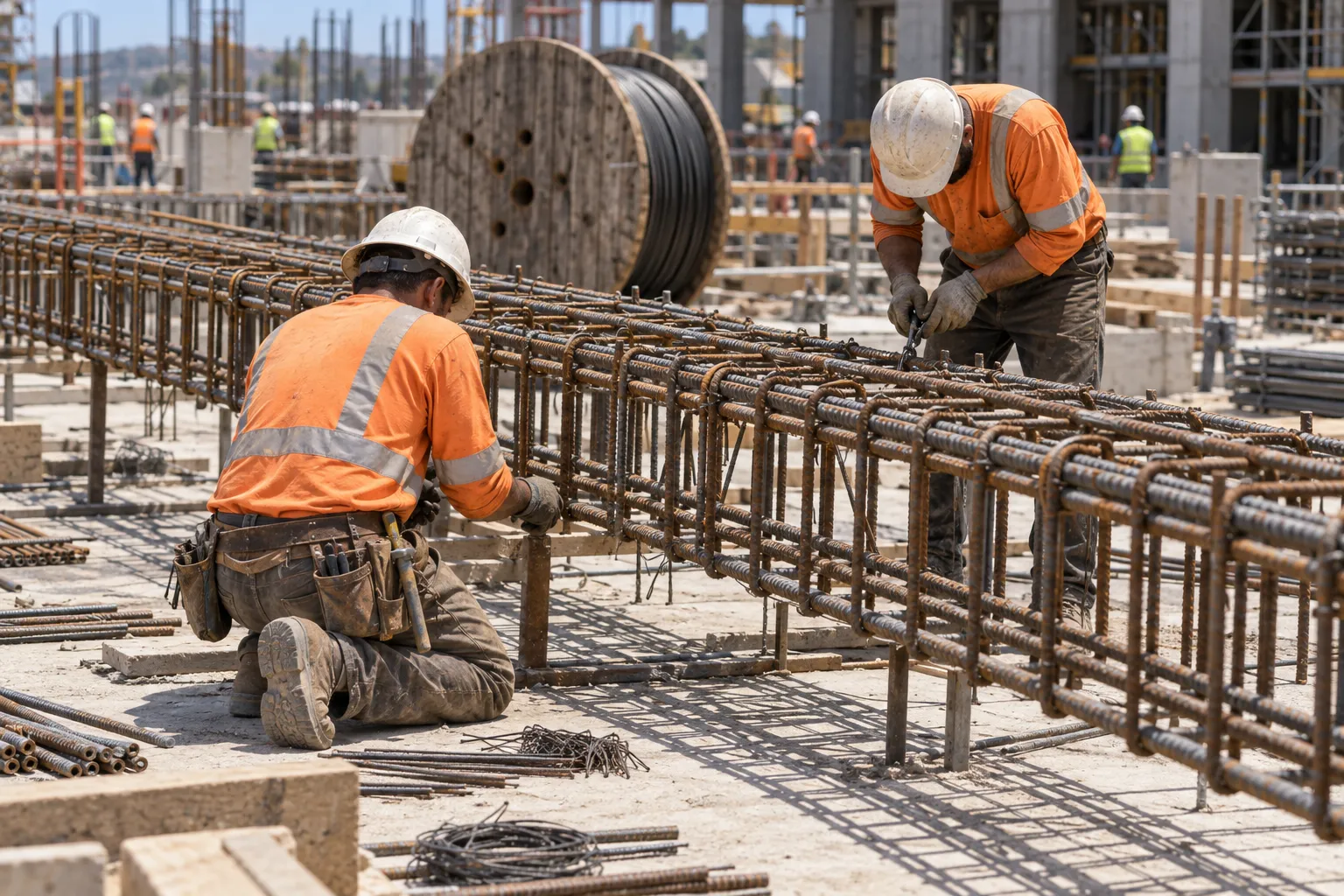
Construction is chaos: materials that show up late, deadlines that slip, crews that walk. Your accounting should not be. ARC CPA is a Halifax accounting firm that keeps construction businesses across Nova Scotia, New Brunswick and PEI running on time: books current, filings in, and the money you were leaving on the table back in your bank account, where it should be.
Construction clients includeC. Stephens Construction Ltd.
Why a specialist
Why hire an accountant who specialises in construction?
A good accountant should pay for themselves: claims you did not know you could make, penalties you never pay, jobs you stop underpricing. In construction that takes someone who knows the trade. These are the problems a general bookkeeper misses, and the ones that cost contractors the most.
Supplier bills you can’t match to invoices
Charge accounts at Kent, Home Hardware and Rona add up all month like a credit card. A $25,000 cheque goes out and nobody knows which invoices it paid, or which job they belong to. We match every payment to the invoices it covered.
Receipts overflowing the truck
A shoebox on the passenger seat is not a filing system. Every lost receipt is a claim you cannot make, or cannot prove when the CRA asks. Our clients photograph receipts into Dext from their phone, and that is the end of it.
Subcontractor payments and reporting
Pay subcontractors and every payment has to be reported on T5018 slips each year. Miss it and the fines are heavy, and most general bookkeepers do not know it exists. And calling someone a subcontractor does not make them one.
The fine print on workers comp
For most businesses coverage is optional. In construction it is not, and premiums depend on your payroll and your trade. New owners often run for months with employees and no coverage, then get a back bill.
Money left on the table
HST paid on materials and never claimed back. Rebates on new builds. Government credits and incentives you did not know you qualified for. Costs set up the right way, so you pay less tax. A general bookkeeper rarely goes looking for any of it.
Not knowing which jobs make money
Most contractors find out at year end whether the year made money, never which jobs did. The truck, insurance, tools and trailers belong to no single job, so they never make it into the quote.
Why they call
The six most common reasons construction businesses call us
Starting with the one we hear most.
Most common
A letter from the CRA
HST returns that stopped going in, an annual filing that is late or missing, or a return that was filed wrong. Now the CRA wants answers.
Word gets around. A friend in the trades got audited, and the way he kept his books looks a lot like the way you keep yours. It is fair to wonder whether you are next.
Someone is doing your books, but nobody can tell you which projects are profitable and which are losing money. Without that, you can pour time into the kind of work that barely pays.
Why it matters
The CRA looks at construction harder than almost anyone
A lot of cash moves through the trades, and the CRA knows it. That is why construction gets more attention than most industries, and why a contractor who files late gets more attention again. Two businesses, one files on time and one does not. You can guess which one gets picked.
The point of having a firm that knows construction do your books is that everything is documented as it happens. If the CRA wants to see it three years from now, proving it is painless instead of a scramble.
For a construction company an audit is not if, it is when. And when it comes, you want to be ready.
Catching up takes anywhere from ten days to sixty, depending on where things stand. After that, it runs like clockwork: the same steps, on the same dates, every month.
01
Send us a message
A couple of lines about the business and what is going on. A partner comes back to you and sets up a call. Go to the form
02
A 30-minute call, a proposal the next day
How the books are done today, how receipts are kept, what is on the go with the CRA. The proposal is based on your business and nobody else’s.
03
Day one: your CRA account
You authorise us with the CRA in the first meeting. Thirty seconds in, we often find unfiled returns or letters you never saw.
04
Weeks one and two: setup, then the work
QuickBooks Online and Dext set up, and the real starting point found. More than half the time the books are not where the owner thinks. Current books first, past problems fixed as they surface.
05
Day 60, and every month after
Books done every month by the same bookkeeper. HST, payroll remittances and T5018 filed on time. Statements the bank accepts, and job costing when you want to know what a job made.
What we have found
Stories from the trades
Real clients, no names. Most called about one problem and had a bigger one underneath it.
Case study: catch-up
When the books started slowing down the business
A large construction company came to us almost killed by its own success. It was busy and it was growing, and the back office could not keep up. The books fell behind, and the further behind they got, the harder it was to take on new work.
We cleaned the books up and put the company on the monthly cycle.
Today it is one of our larger clients. The accounting side runs smoothly, so they can focus on running the business.
Sixty days in, only to find a corporation is not run like a sole proprietorship
A new construction company called us sixty days in. The owner had incorporated and kept doing the books himself, the way he would have as a sole proprietor. He called when he noticed something was off.
It was worse than he knew. A corporation is its own taxpayer, with its own filings, its own rules for how the owner gets paid, and its own deadlines, and none of it had been set up. He also had employees on the payroll and no workers comp coverage, so he was already behind with a back bill coming.
We set the corporation up properly, fixed what was already wrong, and he has run on the monthly cycle since.
It took a letter from the CRA to find out the books had gone wrong
A contractor came to us on a friend’s referral. His old provider was slow to answer and kept stalling. We got authorised on his CRA account in the first meeting.
Within minutes we found a pile of late HST filings and CRA letters he had never seen. They had gone to his accountant, not to him.
Late returns filed, the CRA answered, and his mail now comes to him.
The owner of a construction company landed one of its biggest jobs, but somewhere along the way he could feel it going wrong. His books were kept to what the CRA needs, which is not always what an owner needs. Books that are good enough for the CRA are not always good enough to tell you what is going on inside the company.
We built a live sheet with him that traced the costs back to the job: labour, suppliers and invoices. It showed a heavy loss. The job had been underpriced, and the costs had got away once it was running.
The loss could not be undone. But the job costing told him exactly how to price the next one.
What clients say
“Working with Clem at ARC has been an absolute game changer for our business. Their team is incredibly hardworking, efficient, and always available whenever we need support or answers.”
Trent Scarfe & Sarah Hayden
“Since bringing our business accounting needs to ARC and team, we have seen nothing but professionalism at its finest. We couldn’t be any more pleased with the team.”
C. Stephens Construction Ltd.Chad & Nicole Stephens
Focus on your business
You run your company. We’ll run its books.
Materials show up late. Deadlines slip. A good worker leaves in the middle of a job. So much of construction is out of your hands. Your books should not be one more thing on that list. Accounting is the one part of the business you can make run like clockwork.
Hand them to us and they are off your plate. Our job is to make the books worth paying for: money found, penalties avoided, and your time back to grow the business. We set things up the way they should be, ask what we need to know, and explain anything worth knowing in plain language. The line we hear more than any other: "I’ve been running a business for 15 years and nobody ever explained this to me."
I don’t expect the owner of a construction company to know accounting, and you don’t want me swinging a hammer on your site either. You do what you are best at, we do what we are best at. That is the partnership.
Clem Forest-Leblanc, partner
Monthly, not yearly
Your accounting done right, every month. You will never have to chase us.
On a job site, respect goes to the people who show up, do the work right and never have to be chased. That is how we run your accounting.
Specific, definitive, on time. The same bookkeeper every month, the month closed by the same date, HST, payroll and T5018 filed before they are due, and questions answered in the eleven months the old accountant was not around. In a business where so much is out of your control, this part is not. And your mail still comes to you.
Electrical, plumbing, HVAC and the rest, with crews, trucks and supplier accounts. Many of our construction clients do a million dollars a year or more.
New construction companies
In your first year and want the basics set up right from the start, not fixed later.
The spouse, the part-time bookkeeper or the spreadsheet worked when you were smaller. Now the business needs its books done properly, every month.
Where we specialise
Halifax-based accounting for Atlantic Canadian construction companies
ARC CPA is based in Dartmouth. Our partners live and work here, and so do our construction clients: across Halifax and HRM, throughout Nova Scotia, and in New Brunswick and PEI, from Moncton, Saint John and Fredericton to Charlottetown and Summerside.
We know how construction runs in this region: the building boom in HRM, the slow months, the running accounts at the local suppliers, and the rules that change at each provincial border. HST is 14% in Nova Scotia and 15% in New Brunswick and PEI. Workers comp runs through WCB Nova Scotia, WorkSafeNB and the WCB of PEI, each with its own rules. Your bookkeeper works to the ones that apply to you.
Frequently asked questions
Your questions, answered.
Do I need an accountant who knows construction?
If you pay subcontractors, have employees on site, carry supplier accounts or build homes, yes. Subcontractor reporting, workers comp and HST on builds are specific to construction, and the CRA pays closer attention to the industry. A bookkeeper who has not seen them before often does not know they exist.
Do I have to file T5018 slips?
If construction is your main business activity and you pay subcontractors for construction services, the CRA expects those payments reported on T5018 slips. The return is due six months after the end of your reporting period, and missing it brings penalties. More on T5018 reporting.
Do I need workers compensation for my construction company?
In construction it is generally not optional, and new owners often find out late. The rules differ between Nova Scotia, New Brunswick and PEI. We check where you stand in the first week. More on workers comp.
My bank asked for financial statements. What do they want?
Usually a compilation engagement: financial statements prepared by a CPA firm (the old name was a notice to reader). A bank will not read your corporate tax return. Financial statements for the bank.
Should my truck be in the company or in my name?
It depends on how the truck is used, how it was bought and what is owing on it. Moving a vehicle or equipment into a corporation can usually be done without triggering tax, but not if there is more debt on it than it is worth. More on incorporating.
Can you catch up books that are years behind?
Yes. Most catch-ups take between ten and sixty days, and late HST and tax returns get filed along the way. Behind on HST.
Do you work with general contractors and home builders?
Yes. They take a little more setting up because of HST on new residential builds and major renovations, and rental buildings built to hold, but we work with both and would take on more. General contractors and builders.
I just started my company. Is it too early to call?
No, it is the best time. About half the construction businesses we take on are in their first six months, and almost all of them have something to fix. Starting a construction company.
Get in touch
Take the books off your plate.
Send us a couple of lines about the business and what is on your mind: a CRA letter, a bank asking for statements, books that got away from you. We will come back to you, set up a 30-minute call, and send a proposal the next day.
What happens next
01
You send us a note
A couple of lines about the business and what you are dealing with is plenty.
02
We come back to you
Usually with a question or two, so the call is not spent on the basics.
03
We set up a call
A proper conversation about how the business runs and what your accounting actually needs.
04
You get a plan
What we would look after, how it would run month to month, and twelve months of pricing set out up front.